The term physical medicine comes from the Greek word physis, meaning nature, so this medical term can be translated as natural medicine.
Physical medicine studies the biological effects and the use of various forms of physical energy on the body.
Physical medicine is said to be both the oldest and the most modern branch of medicine, because constant technological progress keeps pushing the boundaries of recovery, even in the most severe conditions.
Physical agents are dosed like medicine, which is why it is important that your physical therapy is prescribed by a specialist in physical medicine and carried out by physiotherapists under their supervision.
They are applied to a specific area, with a specific intensity and duration.
Physical agents have their indications, but also contraindications (situations in which they must not be used).
PHYSICAL THERAPY
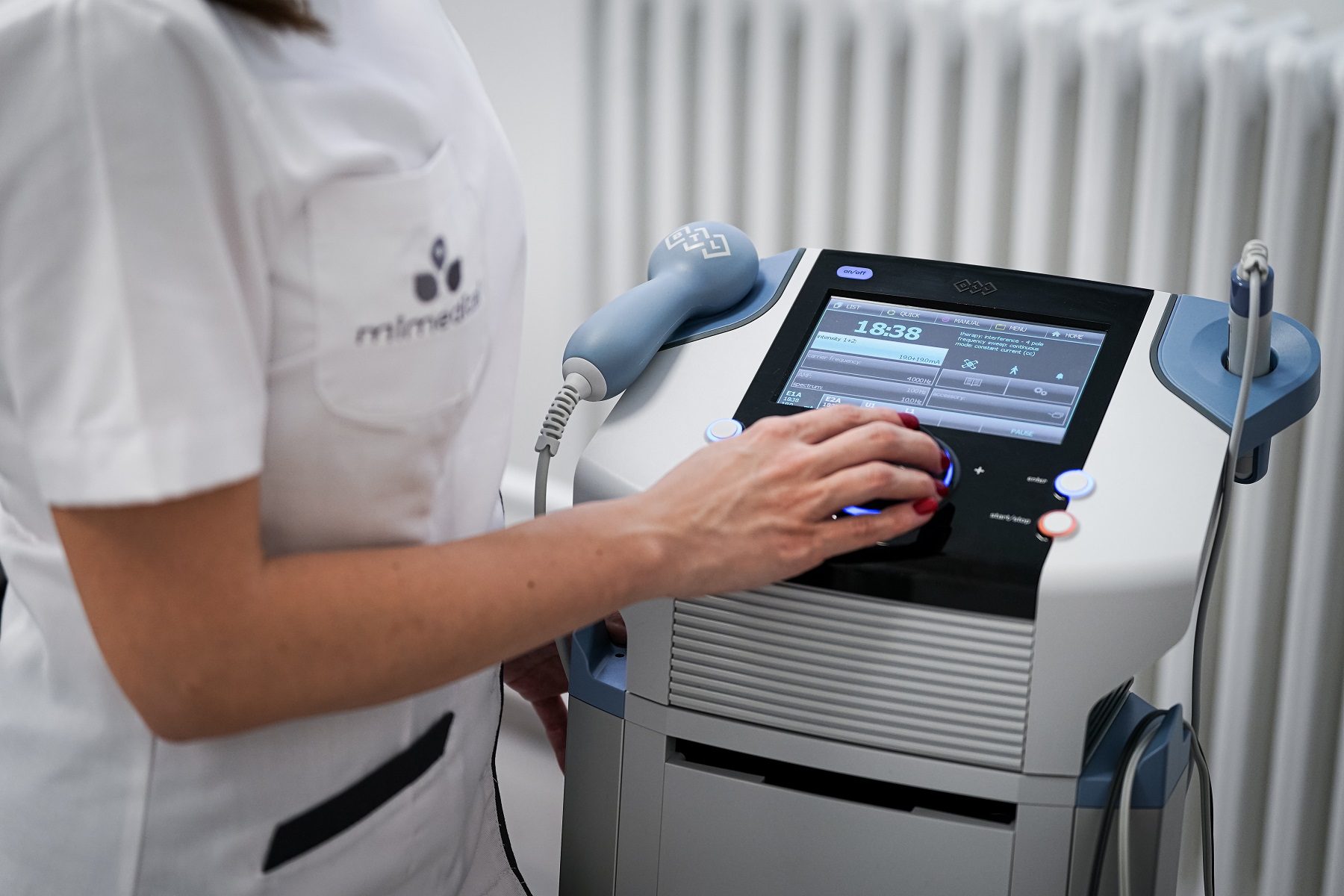
Depending on whether equipment is used, it can be divided into:
Based on the agent used, physical therapy is divided into:
Electrotherapy, which involves the use of various forms of electrical energy, such as:
Direct current a) continuous flow – galvanic current b) pulsed flow – diadynamic current and electrical stimulation; low-frequency current – up to 100 Hz, faradic current; medium-frequency current – 100–10,000 Hz, interferential currents; high-frequency current – over 10,000 Hz – shortwave diathermy and microwaves.
TECAR therapy uses high-frequency currents, usually in the range of 300 kHz to 1 MHz (most often 448 kHz), to generate heat within the treated tissue. This frequency allows heat to penetrate deep into the tissue without damaging the surface layers of the skin. This makes it ideal for treating various musculoskeletal conditions.
Laser therapy – stimulated emission of electromagnetic radiation, which we use to reduce pain and inflammation; it improves healing and has a neuromodulatory effect.
The laser restores the activity of enzymes previously blocked by inhibitors.
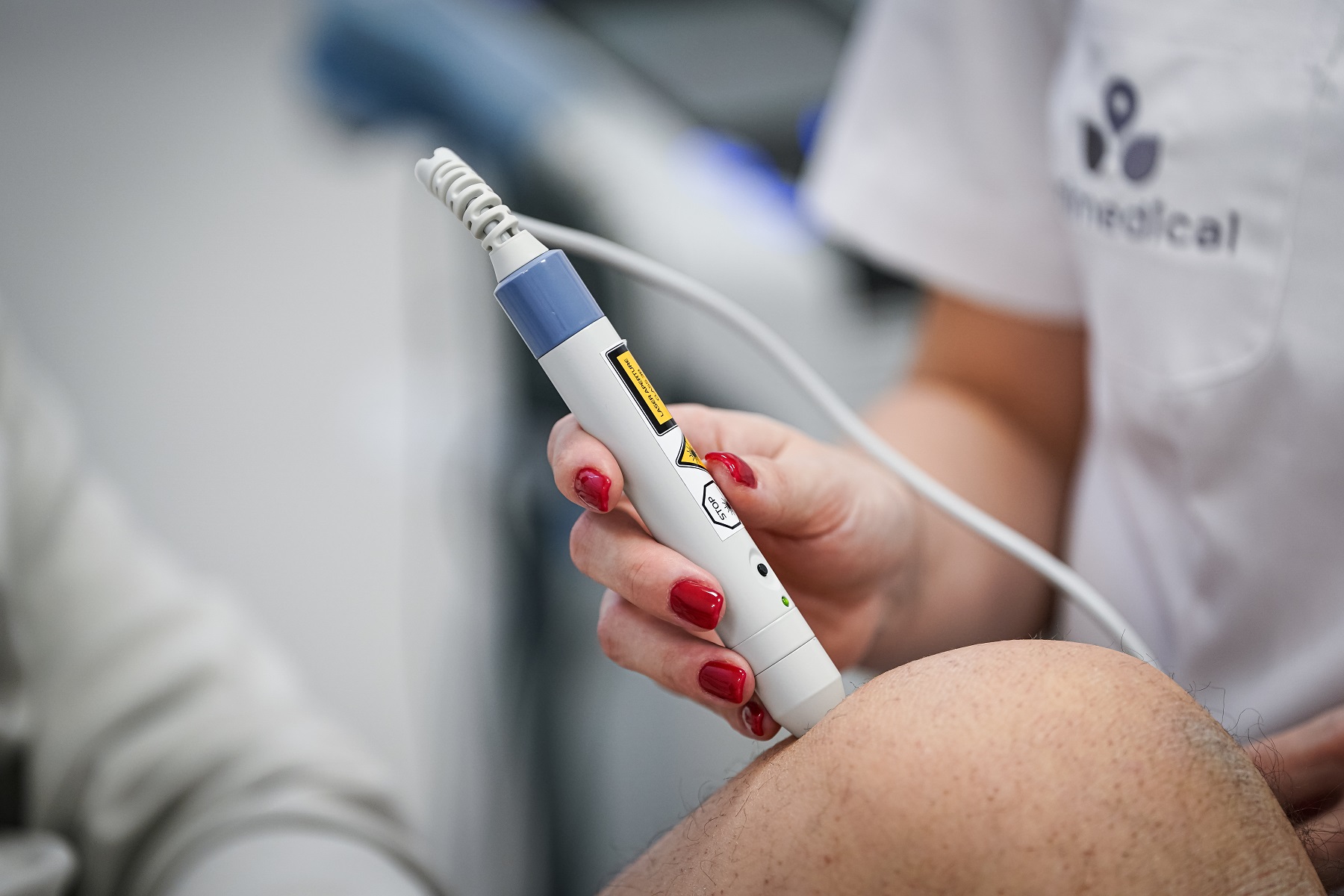
A non-invasive method that painlessly stimulates acupuncture points. Ideal for people who are afraid of needles.
Ultrasound therapy involves the use of sound in the ultrasound range, i.e. sound waves with frequencies beyond the range of human hearing (above 16–20 kHz). Ultrasound is a form of mechanical energy that is transmitted in the direction of the wave.
The main difference between electromagnetic waves and sound waves is that sound waves cannot travel through a vacuum.
Ultrasound has thermal and non-thermal biological effects.
Warming is achieved after 5 minutes.
Micromassage is an effect produced by alternating zones of compression and decompression in the tissue.
 Mon – Fri: 7am–9pm / Sat: 8am–2pm
 +381 64 57 57 777
 Riste Marjanovića 10

 ordinacijamimedical@gmail.com
 Facebook
 @mi.medical_