 Pon - Pet: 07-21h / Sub: 08-14h
 +381 64 57 57 777
 Riste Marjanovića 10
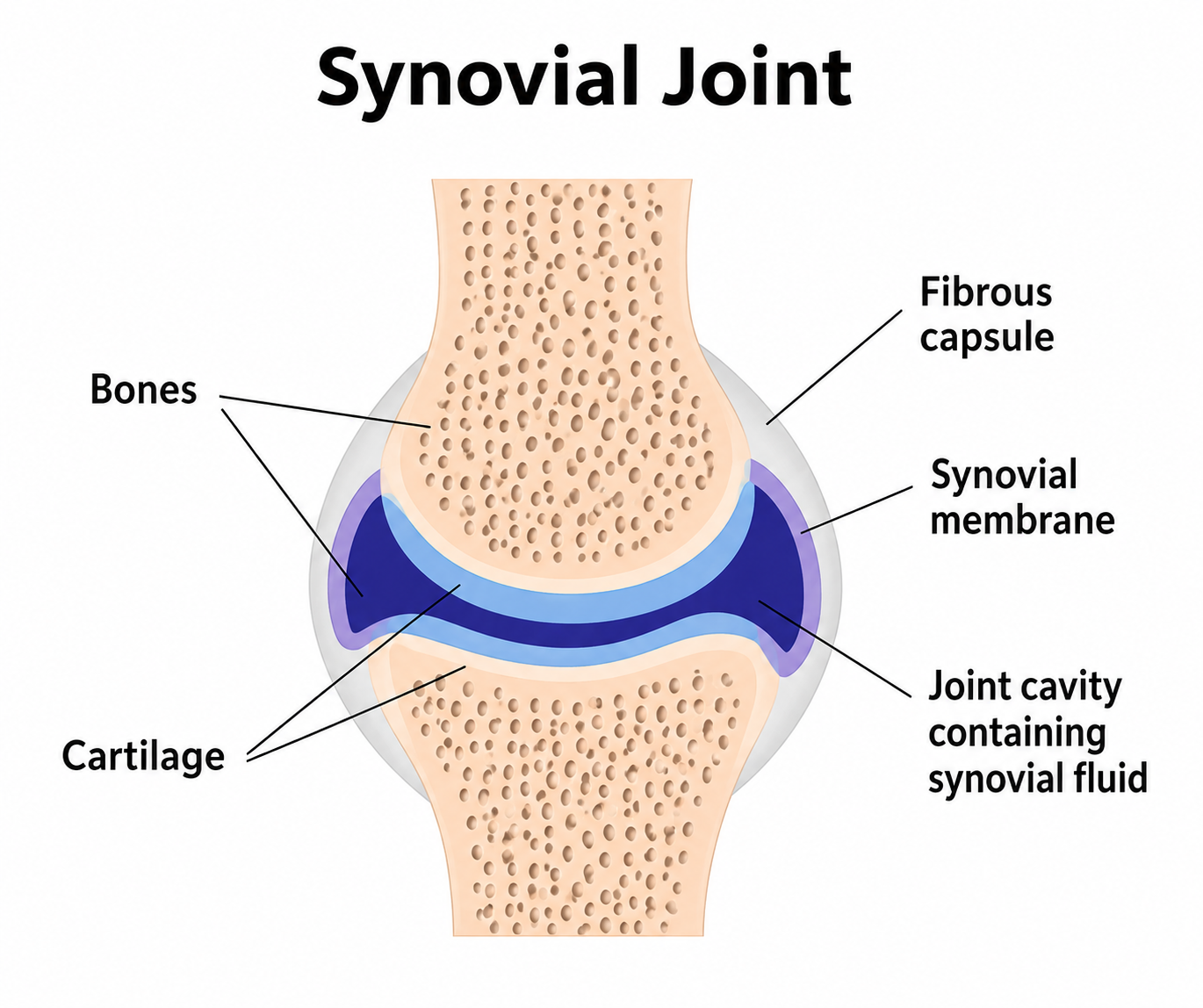
Broadly speaking, a peripheral joint consists of the ends of bones covered with cartilage, which helps absorb the forces acting on the musculoskeletal system. Cartilage contains neither blood vessels nor nerves. The joint is surrounded by a fibrous membrane called the joint capsule, which is lined on the inside by the synovial membrane. The synovial membrane has a rich blood supply and produces synovial fluid, which lubricates the joint, nourishes the cartilage, and allows smoother movement without friction or pain (Figure 1).
Although the traditional classification divides peripheral joint diseases into inflammatory conditions – arthritis – and degenerative conditions – osteoarthritis, these terms do not fully reflect the actual processes involved. Inflammation is present in both groups of conditions, to a greater extent in arthritis and to a lesser extent in osteoarthritis, but the location of the initial changes differs.
Inflammatory diseases, or arthritis (e.g. rheumatoid arthritis), can develop for various reasons, but they share a common feature: the initial changes occur in the synovial membrane of the joint. The membrane becomes inflamed and thickened and produces increased amounts of synovial fluid.
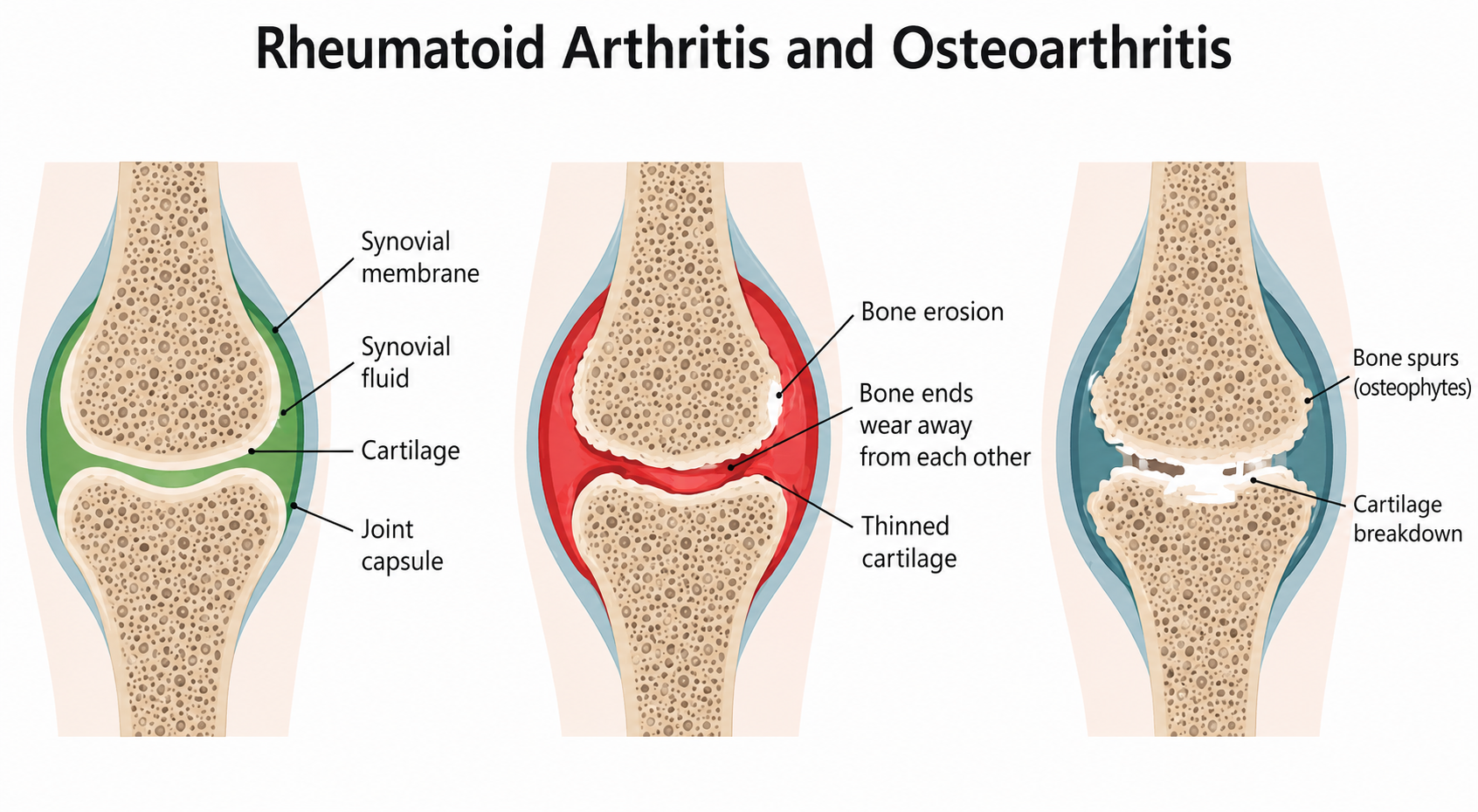
Degenerative joint diseases, or osteoarthritis, most commonly develop as a result of ageing, injuries, and other mechanical factors. The initial changes occur in the articular cartilage and ligaments.
Ultimately, both groups of diseases can lead to damage to all structures within the joint, resulting in pain and loss of joint function. However, this process can progress much more rapidly in inflammatory rheumatic diseases if they are left untreated.
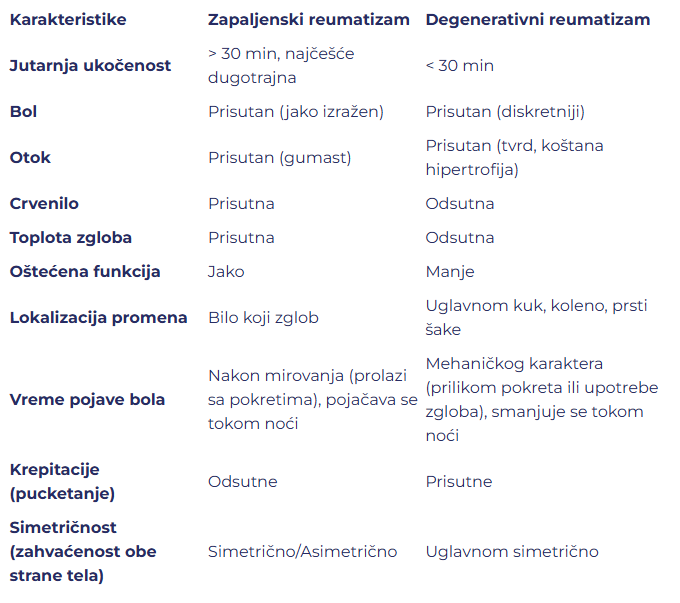
To make it easier to distinguish between these two groups of conditions, the table below presents the general characteristics that may be present or absent:






 ordinacijamimedical@gmail.com
 Facebook
 @mi.medical_